You are standing in front of a postbox with a birthday card, a cheque, or a form that has to arrive by Friday. There is a small metal plate screwed to the front of the box, covered in faded print. Most people glance at it, guess, and hope. Thirty seconds of proper reading would tell you exactly when your letter leaves that box — and whether it is leaving today at all.
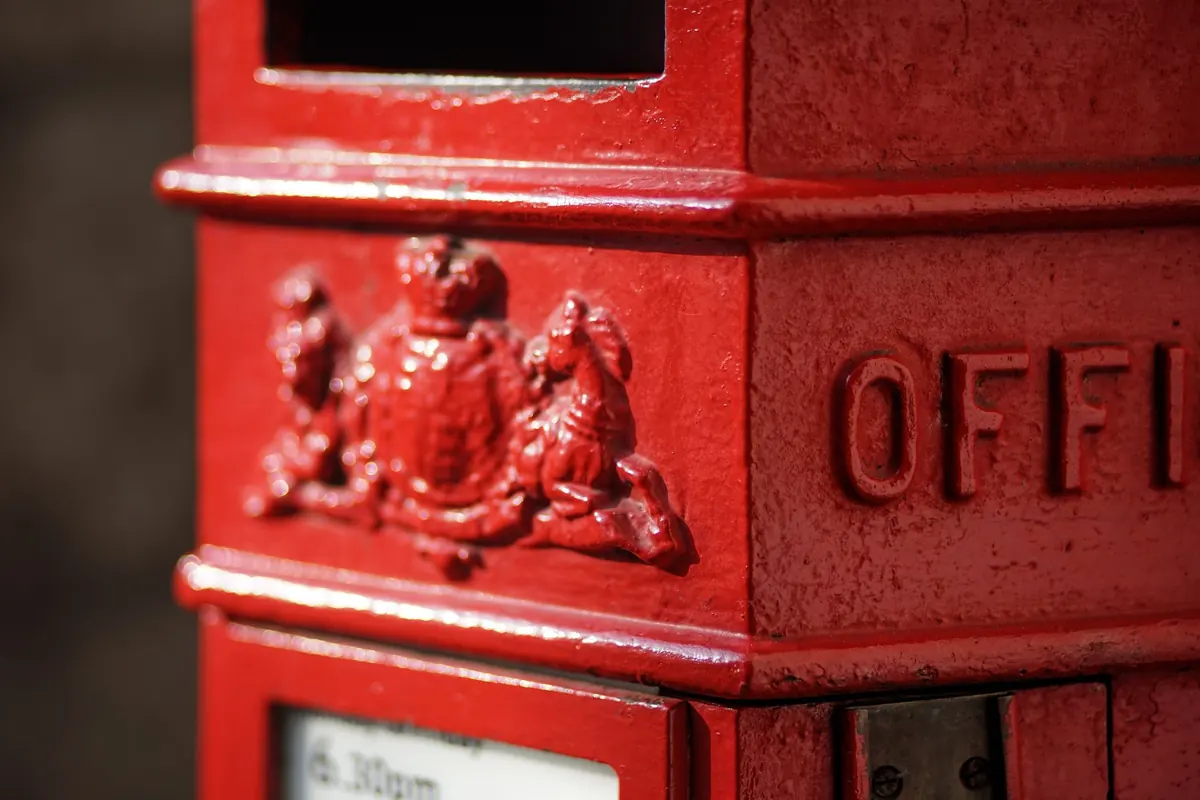
On a standard pillar box or wall box, the collection time plate is fixed to the front, usually below the aperture or on the door itself. Many boxes also carry an identical plate inside the lid, which you can see when you pull it open; that inner copy is often cleaner and easier to read than the weather-beaten one outside.
Whatever its condition, the plate carries the same three pieces of information:
Read it as a table, not as a sentence. Find today's day, then read across to the time on that same line. The time on another line does not apply to you.
The weekday line is the one people read and the Saturday line is the one they ignore, which is exactly backwards on a Saturday. If you post at 11am on a Saturday and the plate says "Saturday 10.30am", your letter is not going anywhere until Monday at the earliest, even though the box is full of weekday times that look later and more generous.
Saturday collections are commonly earlier than weekday ones, sometimes by several hours. Treat Saturday as its own day with its own deadline, and check that line even if you have posted at that box a hundred times during the week.
Most postboxes have no Sunday collection, and the plate often says so plainly with "No collection" against Sunday, or simply omits the day. A few busy boxes in city centres and near transport hubs do have one, so it is worth checking rather than assuming.
Public holidays rarely appear on the plate at all. In most of the UK there is no collection or delivery on a public holiday, so a box emptied on Friday evening may not be touched again until Monday or Tuesday. Temporary paper notices taped to the box are the reliable source here — always read them, and trust them over the metal plate.
Some plates list two or even three collections a day; others list just one. Either way, the final time on each day's line is the one to plan around, because it is the last chance your letter has of moving today.
Posted a minute before that time, your mail goes into the evening bag and reaches the local mail centre that night. Posted a minute after, it sits in the dark until the next scheduled collection — which may be the next morning, or after the weekend. That difference of sixty seconds can be two or three days of delay on an urgent item.
If you are cutting it fine, post at the box itself rather than in a nearby shop's side pocket or an unofficial drop point, where mail is often handed over only once a day.
Some boxes, particularly newer ones and those in busy locations, have a small window or dial on the front showing the day and time of the very next collection. It is set by the person who empties the box, so it can be more current and more specific than the plate. Where the two disagree, believe the indicator, and still check for a paper notice above it.
Post early in the day when the item matters. Build a few minutes of slack into anything with a deadline, because collection times are targets rather than guarantees, and a late van or a full box can push a pickup back. Learn the two or three boxes you use most often and note their last collection times on your phone — one line in a notes app is enough.
Finally, re-read the plate now and then. Collection times change, boxes get re-routed, and plates get updated quietly. A schedule you memorised two years ago is a guess; the plate on the box in front of you is the answer. Look before you post, and your letter will catch the van rather than wait for it.
Photo: Johannes Plenio / Pexels